Showing posts with label wood fireplaces. Show all posts

Cast Iron vs Steel Wood Stoves

In the past wood burning stoves used to be the only solution to cooking and heating requirements. Even today, they still have an important function in homes and many are still the primary source of heat, but of course, there have been improvements to wood stoves. For instance, in the past they needed to be positioned a good distance from any wall while many of the more recent designs can be as close as eight inches to a wall. Moreover, they are extremely clean burning with high ratings for their heat efficiency.

The wood fuel stoves occasionally called fireplaces stoves, are available in a variety of designs, ranging from conventional to contemporary looking. The three main components they are manufactured from include plate steel, iron and sheet metal although sometimes a combination of all three may be used. Several of the manufacturers modify the design of the more traditional cast iron stoves through the use of various kinds of material on the external surface. More often than not enamel, porcelain and marble are employed in an array of various colors to alter the appearance.

Cast Iron Wood Stove
The steel plate stoves are typically made out of 3/16 to 1/4" thick plates which are first cut and then stamped into shape. Cast iron stoves on the other hand are made of cast components that get bolted together. Since there is hardly any difference between the cast iron and steel wood stoves, it is much easier to make a decision based upon your budget, style and size that you need. In addition, they both include detailed lines as well as a grain free surface to help with your selection.

More often than not it is possible to tell whether wood burning stoves are well designed simply by looking for tight doors, smooth welds, clean castings and draft controls which are smooth functioning. Needless to say attention to detail along with good craftsmanship will always be important. Many of them have metal plates or fire-bricks that can help protect against burnout. Most of these materials improve the life span of the stoves as well as the thermal mass to some degree. Even after a fire has burned out, wood fireplaces and stoves that weigh five hundred pounds, will still radiate heat for many more hours.

If you are purchasing one of the wood stoves to fit inside a house which has not had one previously, then you must have a chimney put in, which normally entails cutting a hole in the roof. Furthermore, if you intend to utilize a chimney which is already installed, then make certain the stove which you are considering buying is compatible with it. Even when utilizing a pre-existing chimney chances are that it will need to be relined with steel, so as to work properly with the modern stoves which are being manufactured today.
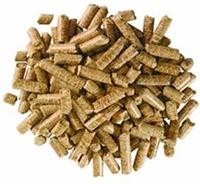
Advantages of Wood Pellets for Stoves

Wood pellets used as the fuel source in wood pellet stoves are made from recycled, processed and compacted sawdust and are a by-product of saw milling and other types of wood transformation processing. These pellets are extremely dense and are produced with low humidity content, normally around ten percent, which allows them to burn with very high combustion efficiency. Their uniform geometry and comparatively small size makes them ideal for automatic feeding with a fine calibration. In addition, they are perfect for feeding to a burner using either pneumatic conveying or auger feeding.

Wood Pellets for Pellet Burning StovesTheir extreme density also helps with compact storage and transportation over long distances. In fact, it is possible for them to be blown from the transport vehicle directly to the customer's storage bunker or silo on their property. Because the price of heating with fossil fuels has continued to increase, a lot of research continues to be carried out into finding other reliable sources of energy to replace non-renewable energy such as fossil fuels. To that end, production and sales of wood pellet fuel stoves and corn pellet stoves has continued to grow unabated.

Bio fuels made from bio mass or organic material have actually been proven to be effective substitutes for non-renewable energy sources. Some of these bio fuels are derived from biodegradable materials such as manure, plants, etc. However, the organic wood pellets are considered one of the best forms of wood fuel. Since they are produced through normal activities such as saw milling, or any other type of woodcutting, they are considered plentiful.

Many of the characteristics of pellets, including low humidity content and higher density, allows them to be automatically used in clean burning heating appliances. Since the pellets are considered biomass they are environmentally friendly, releasing less emissions and ashes. And, as renewable material the wood pellet offers the benefit of a continuous energy supply. There is no deliberate cutting down of trees in order to produce them. Since the pellets are actually considered waste materials, utilizing them as an energy source lessens the problem of waste and waste disposal.

With the increasing costs of fossil fuels it is only natural to turn toward other forms of heating and the pellet stove models have become increasingly popular. The stoves that are specifically designed for wood pellets do have advantages over other types of home heating systems. The normal wood burning stoves require constant maintenance compared to the wood pellet fireplaces stoves. They are also much easier to operate and are more convenient than the traditional wood fireplaces and stoves. Although the physical appearance is similar to the traditional stoves that burn wood, these have microprocessor controls that ensure a clean and efficient fire.

Wood Pellet Fireplace Options

One of the more environmentally friendly ways to reduce reliance on fossil fuels is to heat with wood instead. To that end, using a wood pellet fireplace or wood pellet stove to heat your home is not only convenient but also satisfying knowing that you are doing your bit to help reduce global warming.

Unlike the more conventional wood fireplaces, these types are automatic in that the wood pellets are fed from a storage hopper into the fire, which in turn causes warm air to circulate. The heat output can be adjusted manually or controlled completely hands free with the use of a thermostat.

Existing chimneys can be used with pellet fireplaces although you will likely need a pellet stove insert fitted. However, it is not essential to have an existing fireplace since some fireplace inserts are zero clearance. This means that the pellet fireplace can sit right next to framing or any other interior surface without causing a fire hazard. To do this the fireplace contains a means of controlling the surface temperature of the exterior casing in order to keep it cool. Zero clearance is an ideal choice when installing as part of a new construction or renovation project.

Wood Pellet Fireplace Insert
Several companies have inserts that will help to convert your fireplace, such as the Whitfield pellet stove insert, which creates everything you need to enjoy a wood pellet fireplace. If there is an existing masonry or metal fireplace, then there are many easy and attractive ways to bring new life to it. There are wood, gas and pellet burning fireplace inserts that will fit into almost any traditional fireplace opening.

Overall, pellet fireplaces stoves can be installed into almost any home situation. There has been an increase in the number of companies that sell a vent free fireplace, which in turn has lead to them becoming very popular. Equipped with such things as a remote control and a variable flame height adjustment, most make it possible to control the speed of your assembly blower as well. Although some allow you to turn the unit on from a wall switch, actual flame adjustment must still be carried out manual via the valve on the fireplace and not with any type of a remote device.

Traditional wood fireplaces have always held a special place in the heart and mind of many, as the ambiance and warmth from the flickering flames just seems natural. Nevertheless, the standard fireplaces have come under increased scrutiny during the last few years due to their output of carbon and the pollution caused by the particles that are in the smoke.

Fortunately for us, the wood pellet fireplace is one of the results of the evolving wood fireplace that helps to mitigate some of the problems, including the air pollution. Of course, part of the allure of a traditional fireplace is that ambiance that folks are afraid of losing, yet some of the pellet varieties have features that are designed to enhance the product, such as an adjustable flame height and heat output, which are reminiscent of the traditional fireplace.