Showing posts with label wood burning stoves. Show all posts

Green Benefits of Pellet Burning Stoves

The first gas stove was patented in 1826 with the first practical coal stove being invented in 1833. After that came the invention of the first electric stove in 1891. They have certainly come a long way and there is no doubt that stoves provide efficient heating in addition to being timeless in their unique styling. Nowadays, there are numerous different styles to choose from ranging from gas, wood and even pellet burning stoves. Consequently, you are sure to find one that fits your needs and lifestyle.

The cast iron stove is one more style that is not only efficient but also extremely stylish that remains a popular choice today. Apart from their decorative and attractive traditional styles, they are also capable of using a number of different fuel types, such as coal stoves and wood burning stoves, and numerous other types of smokeless fuels. Of course, they are also able to operate as fully functioning cooking stoves and still provide efficient heating. An output of high heat is a standard feature on all of the styles and models, starting at a low of six kilowatts up to a large wattage of sixteen kilowatts, which is more than capable of heating a large room.

Wood Burning Stoves vs Pellet Stoves

Pellet Burning Stove
With everybody turning toward a greener lifestyle, there is a natural focus on what can be done to make appliances, such as stoves and fireplaces, more environmentally friendly. That is where pellet burning stoves come in, as they are extremely easy to operate and are more convenient than conventional wood burning appliances. Many folks consider that they are as easy to operate as the gas, oil or electric heaters that they are familiar with.

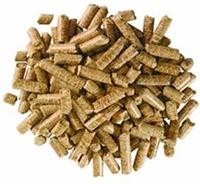
This type of stove burns wood pellets, which is compressed wood that is collected from what would otherwise be waste products of wood and lumber. There are also corn pellet stoves that offer the same type of environmentally friendly and simple operation as the wood pellet stoves.

Pellet Burning Stove Efficiency

Most of the pellet stoves rely on sophisticated computers and circuit boards to determine how much pellet fuel should be burned. Most models have at least two burn settings and some use thermostats to control the fire. This type of system is highly efficient and causes very little pollution.

An additional benefit to these types of pellet burning stoves is that they burn wood so efficiently that a standard chimney is not normally required. Typically, the exhaust fumes are routed through a small hole in the wall to the outside using a pipe known as a pellet stove vent. Pellet stove inserts can also be vented up through an existing chimney, but normally the chimney will need to be relined with a stainless steel liner.

Wood Pellet Stove Pros and Cons

In the main, a pellet stove, or more especially a wood pellet stove, is not just environmentally friendly, it is possibly among the most convenient, as you are able to start the fire either by pressing a button or adjusting your thermostat. In addition, it is amongst the most cost-effective ways of heating your home that is available these days.

Wood Pellet Stove vs Corn Pellet Stove

Both corn pellet stoves and wood pellet stoves are energy efficient because of the combustion, which is almost complete with no smoke. The majority of corn pellet stoves have an extra setting that adjusts the removal rate along with airflow, permitting wood pellets to be used in it as well.

Many believe that even though you plan to burn wood pellets you should consider a corn pellet stove as well, since there may well be times when wood pellets are in short supply. You could then drop by a pet or feed store to buy a bag of corn feed making it easier to obtain the fuel required to heat your house.

Furthermore, pellet burning stoves are more or less maintenance free. Every few days, depending on your heat setting, all you have to do is tip a bag of corn or wood pellets into the hopper and that is it. Corn is gluier than wood pellets so every month you may need to clean the draft fan and maybe the auger.

It is a good idea to get a wood pellet stove model that provides a battery back-up option because they use electricity to run the combustion air fan, feed augers and the blower. Whenever the electricity does go off, then the stove will automatically change over to battery power.

Wood Pellet Stove Advantages

Pellet fireplaces stoves burn more efficiently than the conventional wood burning stoves and fireplaces and generate less ash, making clean up slightly easier. Because they are clean burning they allow for improved air quality and the majority of wood pellets are actually produced from the waste product that derives from wood processing that would otherwise be worthless and a waste. The wood pellets need less storage space and are a great deal easier to cope with than firewood. Furthermore, they typically come in a forty-pound bag, which makes it easier to carry and store.

Nothing in this world is perfect and that applies to a wood pellet stove as well. For instance, the stoves are mechanical, which implies that they are more inclined to failure than the more conventional wood burning stoves. There is a certain degree of noise involved too, yet the majority of folks do not mind it and describe it as a continuous dull rumble. Obviously, power is needed to operate them and that can add to your electric bills and might leave you without heating in the event of a power failure. The wood pellets do cost more than wood and from time to time can be in short supply.

Cast Iron vs Steel Wood Stoves

In the past wood burning stoves used to be the only solution to cooking and heating requirements. Even today, they still have an important function in homes and many are still the primary source of heat, but of course, there have been improvements to wood stoves. For instance, in the past they needed to be positioned a good distance from any wall while many of the more recent designs can be as close as eight inches to a wall. Moreover, they are extremely clean burning with high ratings for their heat efficiency.

The wood fuel stoves occasionally called fireplaces stoves, are available in a variety of designs, ranging from conventional to contemporary looking. The three main components they are manufactured from include plate steel, iron and sheet metal although sometimes a combination of all three may be used. Several of the manufacturers modify the design of the more traditional cast iron stoves through the use of various kinds of material on the external surface. More often than not enamel, porcelain and marble are employed in an array of various colors to alter the appearance.

Cast Iron Wood Stove
The steel plate stoves are typically made out of 3/16 to 1/4" thick plates which are first cut and then stamped into shape. Cast iron stoves on the other hand are made of cast components that get bolted together. Since there is hardly any difference between the cast iron and steel wood stoves, it is much easier to make a decision based upon your budget, style and size that you need. In addition, they both include detailed lines as well as a grain free surface to help with your selection.

More often than not it is possible to tell whether wood burning stoves are well designed simply by looking for tight doors, smooth welds, clean castings and draft controls which are smooth functioning. Needless to say attention to detail along with good craftsmanship will always be important. Many of them have metal plates or fire-bricks that can help protect against burnout. Most of these materials improve the life span of the stoves as well as the thermal mass to some degree. Even after a fire has burned out, wood fireplaces and stoves that weigh five hundred pounds, will still radiate heat for many more hours.

If you are purchasing one of the wood stoves to fit inside a house which has not had one previously, then you must have a chimney put in, which normally entails cutting a hole in the roof. Furthermore, if you intend to utilize a chimney which is already installed, then make certain the stove which you are considering buying is compatible with it. Even when utilizing a pre-existing chimney chances are that it will need to be relined with steel, so as to work properly with the modern stoves which are being manufactured today.

Advantages of Wood Pellets for Stoves

Wood pellets used as the fuel source in wood pellet stoves are made from recycled, processed and compacted sawdust and are a by-product of saw milling and other types of wood transformation processing. These pellets are extremely dense and are produced with low humidity content, normally around ten percent, which allows them to burn with very high combustion efficiency. Their uniform geometry and comparatively small size makes them ideal for automatic feeding with a fine calibration. In addition, they are perfect for feeding to a burner using either pneumatic conveying or auger feeding.

Wood Pellets for Pellet Burning StovesTheir extreme density also helps with compact storage and transportation over long distances. In fact, it is possible for them to be blown from the transport vehicle directly to the customer's storage bunker or silo on their property. Because the price of heating with fossil fuels has continued to increase, a lot of research continues to be carried out into finding other reliable sources of energy to replace non-renewable energy such as fossil fuels. To that end, production and sales of wood pellet fuel stoves and corn pellet stoves has continued to grow unabated.

Bio fuels made from bio mass or organic material have actually been proven to be effective substitutes for non-renewable energy sources. Some of these bio fuels are derived from biodegradable materials such as manure, plants, etc. However, the organic wood pellets are considered one of the best forms of wood fuel. Since they are produced through normal activities such as saw milling, or any other type of woodcutting, they are considered plentiful.

Many of the characteristics of pellets, including low humidity content and higher density, allows them to be automatically used in clean burning heating appliances. Since the pellets are considered biomass they are environmentally friendly, releasing less emissions and ashes. And, as renewable material the wood pellet offers the benefit of a continuous energy supply. There is no deliberate cutting down of trees in order to produce them. Since the pellets are actually considered waste materials, utilizing them as an energy source lessens the problem of waste and waste disposal.

With the increasing costs of fossil fuels it is only natural to turn toward other forms of heating and the pellet stove models have become increasingly popular. The stoves that are specifically designed for wood pellets do have advantages over other types of home heating systems. The normal wood burning stoves require constant maintenance compared to the wood pellet fireplaces stoves. They are also much easier to operate and are more convenient than the traditional wood fireplaces and stoves. Although the physical appearance is similar to the traditional stoves that burn wood, these have microprocessor controls that ensure a clean and efficient fire.

Home Gas Stoves History

The first gas stove was unveiled to the world back in 1851, during the World Fair in London. However, the technology of gas stoves did not start to become a commercial success until the 1880s, partly due to the slow growth of the gas pipe network. The first stoves were somewhat awkward and clumsy to use but that soon changed once the manufacturers incorporated an oven into the base and reduced the overall size of the appliance in order to fit and match in with other kitchen equipment.

There are two basic types of ignition systems used in the cooking stoves of today, which are either electric or standing pilot. A standing pilot refers to a small continuous burning gas flame called a pilot light that is under the cook top, usually between the front and rear burners. When the stove is turned on, the flame lights the gas that is flowing out of the burners. The advantage of this type of system over electric stoves is that it is easy to use and is totally independent of any other type of external power source. The one downside is that the flame consumes fuel on a continuous basis, even when the stove is not in use.

Home Gas Stove
The early gas stoves did not have pilot lights, as they had to be lit manually with a match. If somebody inadvertently left the gas on with the door closed, then gas would fill the stove/oven and eventually the whole room. Even the smallest of sparks, such as the small arc that sometimes occurs when a light switch is turned on, could ignite the gas resulting in an explosion. To stop this from happening in the future, the manufacturers developed and installed safety valves. The safety valve uses a pilot flame that ignites the main burner when it is turned on, heating a thermocoupler that sends a signal to the valve to stay open. If for any reason the pilot goes out, then the thermocoupler cools and signals the valve to close, which shuts off the gas to the stove.

The modern fireplaces/stoves are designed to burn either propane or natural gas; they require very little maintenance, emit little pollution and can be installed virtually anywhere in your home. Most often, gas fuel stoves can be made to appear like wood burning stoves with the large flames and glowing embers.

Fireplaces stoves can also help save you money on heating costs through zone heating, which means the stove is used to heat only a specific area of the home, such as a family room. In addition, newer gas stoves can be vented out through an existing chimney or even directly vented through a wall that is behind the stove. Not all of the models require outside venting, although the Environmental Protection Agency does not support their use due to the degradation of indoor air quality if venting to the outside is employed.

Corn Stove Pros and Cons

Although the majority of pellet stoves are designed, as their name implies, to burn recycled and processed sawdust, there is another type that are specifically designed to burn corn pellets. While both corn stove and wood stove look much the same from the outside, the inside workings are slightly different.

Both types are highly efficient and they have no need for a chimney. In its place, a pellet stove vent in conjunction with a pipe through an outside wall is used. This venting arrangement makes it easy to have one installed in any room you wish.

The corn pellet stoves include a small screw that is responsible for gradually feeding the firepot. Of course, the speed is adjustable and that is what controls the amount of heat output. They are equipped with draft blowers where combustion air is drawn in and then goes over the pellets while forcing it outside. A slight vacuum is created inside of the heater, which stops smoke from getting indoors.

Wall thermostats are also available to set up for automatic use. The temperature is set to the desired level so that once the day warms up, it will shut down. When the temperature begins to fall towards the evening, it will start up again. The corn stove also has glow plugs as optional igniters that will light the fire automatically when required. With an eighty-five pound hopper, you will be able to run it on a normal basis for many days without having to refill it.

Of course, there are pros as well as cons associated with operating a corn stove. For instance, because corn is clean burning, you will be hard pushed to notice any smoke being emitted from the outside vent pipe. Nonetheless, they do not burn as cleanly as wood burning stoves and they tend to require cleaning out more frequently. In addition, the corn pellets vary more in their moisture content. Nevertheless, they are environmentally friendly because they are a renewable resource. However, chemicals are sometimes used during the growing of the corn, which can result in some toxicity in the exhaust.

Corn pellet stoves do compare more favorably with the wood pellet stoves when it comes to efficiency, yet they do not emit as much heat as conventional wood burning stoves.

The cost to run a corn stove versus a wood stove depends on where you live more than anything else does. For example, if you happen to live in Maine or Massachusetts, you may find it difficult to locate an economical and reliable local supplier. Many times, there is a waiting list for folks who wish to purchase a corn pellet stove, so they are obviously gaining in popularity. In 2006, an estimated 65,000 corn pellet stoves were sold in the United States. In 2007, that figure reached 350,000 of them being used in the US and the number of owners just keeps increasing.